
When owners search brentwood luxury home renovation cost, they are usually trying to answer a more useful question: what does a seven-figure budget actually change inside a house that already sits in a premium neighborhood? In 2026, a $1M modernization in Brentwood can absolutely transform the right property, but only if the budget is structured around performance, not just visual drama.
A luxury modernization succeeds when it fixes the parts of the house that daily life notices first: circulation, natural light, climate comfort, acoustic control, kitchen function, primary suite quality, and clean integration of technology. Our luxury modernization team and home automation team often tell owners the same thing: the goal is not to make every room expensive, it is to make the whole house feel coherent.
The $1M Modernization Breakdown
In Brentwood, $1M does not behave like a giant design allowance. It behaves like a full-project budget that must pay for demolition, protection, engineering, permits, core systems, finish labor, procurement, contingency, and design intent all at once.
Think in bands, not single buckets
A reasonable modernization might allocate large portions of the budget to kitchen and family core upgrades, primary suite transformation, flooring and millwork, HVAC and electrical improvements, and a smaller but meaningful contingency for hidden conditions. If structural rework is heavy, the finish budget tightens immediately. If the structure is cooperative, the owner can push further into material quality and custom detailing.
Budget discipline protects design quality
One sentence worth repeating is this: a premium renovation fails when the owner spends emotionally in design and gets forced to cut rationally in construction. The best Brentwood projects reverse that. They establish budget discipline early so the most visible spaces are not value-engineered in a panic later.
Where the Money Goes
Owners are often surprised by how much of a premium renovation budget is invisible after move-in. That invisible spending is still essential because it is what makes the visible work perform well.
Infrastructure upgrades are rarely glamorous, but they matter
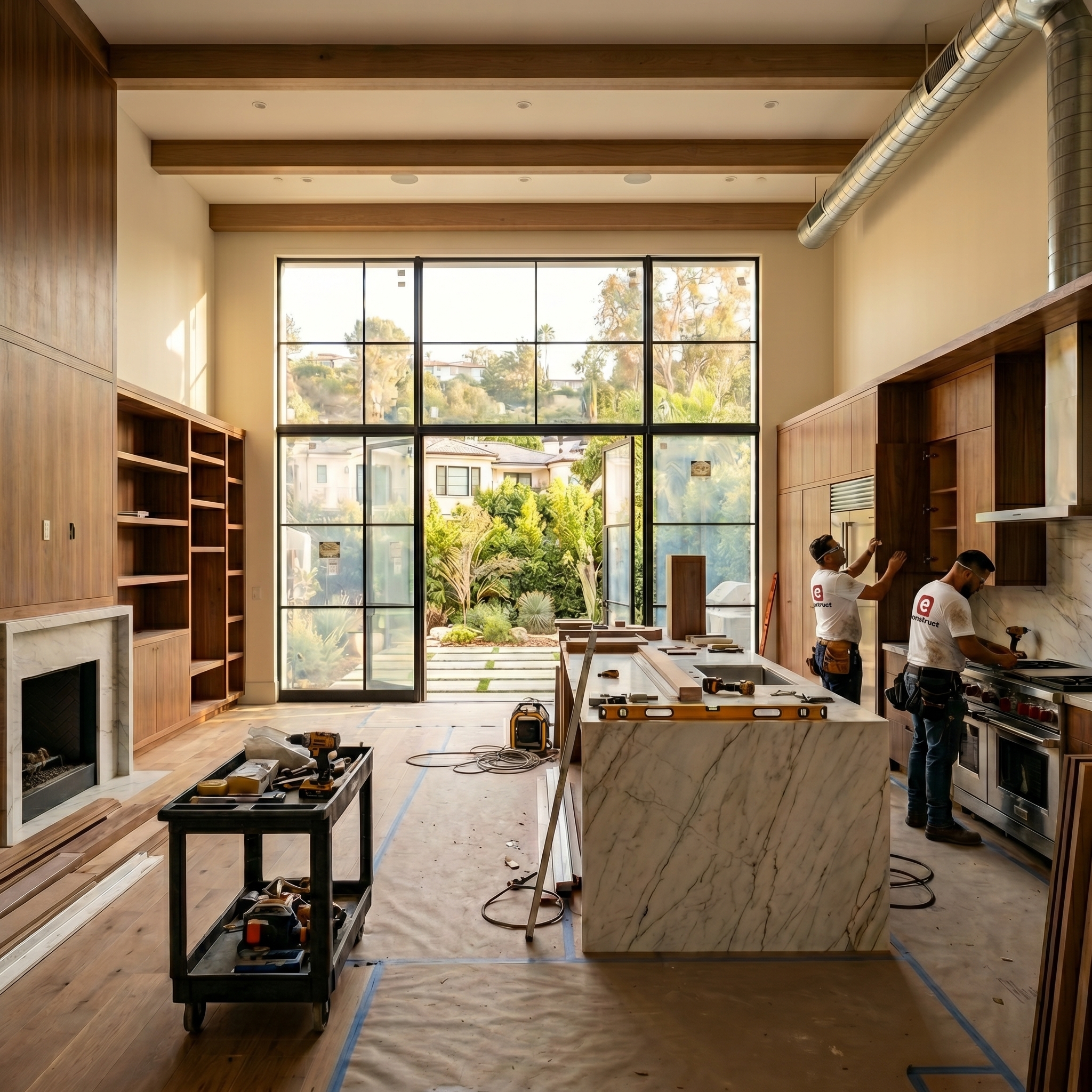
Panels, subpanels, HVAC zoning, plumbing relocations, waterproofing, insulation, sound control, and lighting infrastructure do not photograph like a marble island. They do, however, determine whether the finished house feels effortless or frustrating. If you modernize a Brentwood home cosmetically without addressing aging infrastructure, the project may look fresh but still live old.
Labor and detailing drive premium execution
High-end carpentry, flush base details, specialty plaster, seamless stone alignment, integrated appliances, concealed hardware, and sophisticated lighting coordination all require skilled labor. In premium neighborhoods, labor quality is often the difference between a house that feels custom and one that feels expensive-but-generic.
In luxury modernization, labor quality is the finish.
Premium Finishes That Pay Off
The finishes that justify their price tend to share one characteristic: they improve both use and perception. That means they feel better every day and still make sense years later.
Kitchens, primary suites, and openings usually outperform trend rooms
If the owner is deciding between a highly bespoke entertainment room and a smarter kitchen-family-primary sequence, the second option often produces more daily value. Better openings to the yard, cleaner kitchen workflow, durable flooring, thoughtful stone selection, and a calmer primary bath usually create a stronger lived result than trend-driven one-off spaces.
Technology should disappear into the house
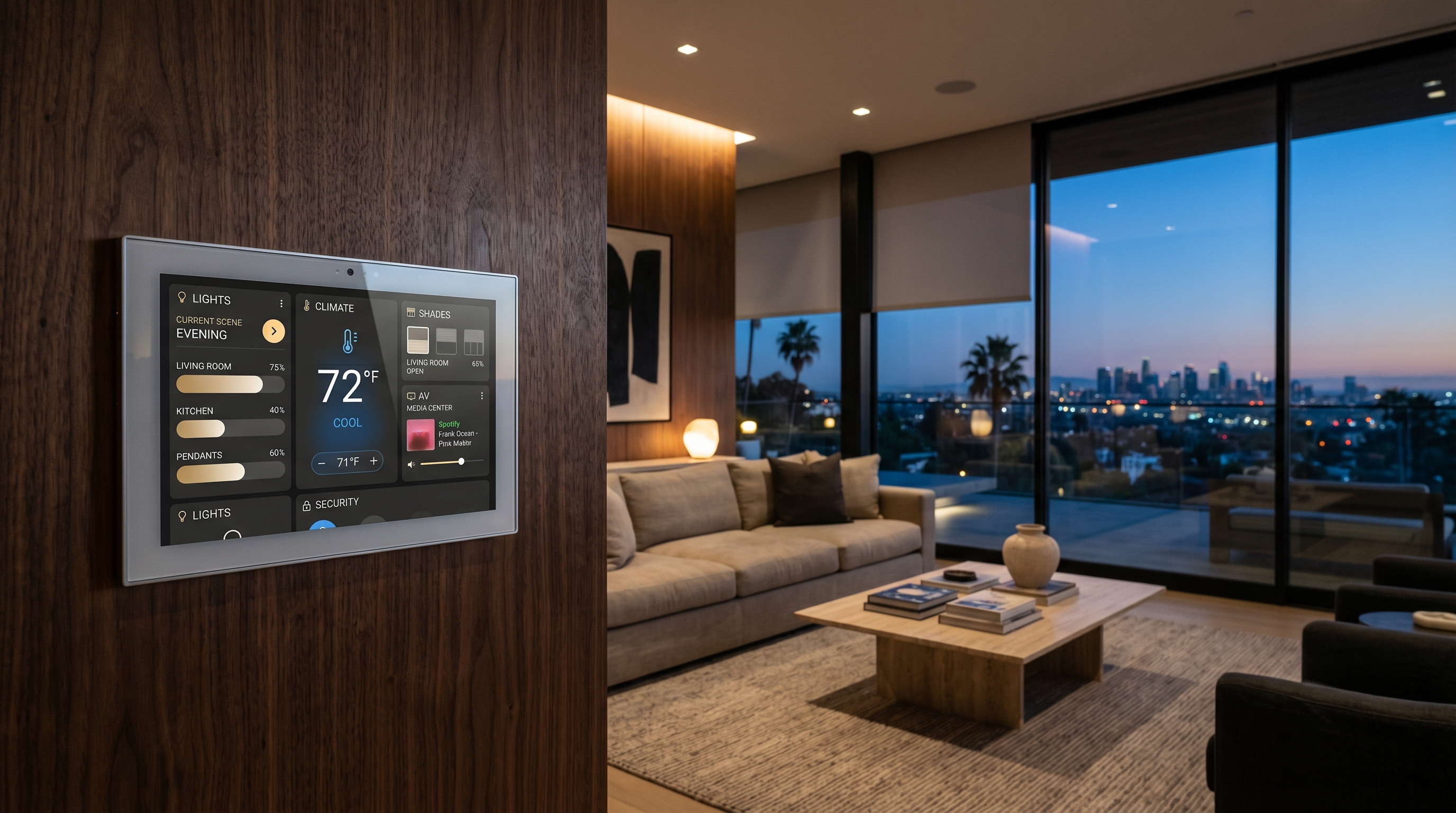
Automation, audio, shading, climate control, and security are most successful when they feel integrated rather than advertised. This is where pairing modernization with a defined home automation scope matters. Wiring, power, rack planning, keypad location, and scene logic all work better when designed into the renovation rather than grafted on late.
Scope Creep & How to Avoid It
Scope creep is rarely random. It usually starts when an owner says yes to design ideas that have not yet been translated into structural, permit, and labor implications.
Design intent needs construction consequence attached to it
Moving a stair, widening a span, removing a bearing wall, changing window geometry, adding pocket doors, or relocating wet areas all carry ripple effects. On paper they may seem like single decisions. In the field they affect engineering, mechanical routing, electrical work, finish sequencing, and schedule.
The best control tool is a decision calendar
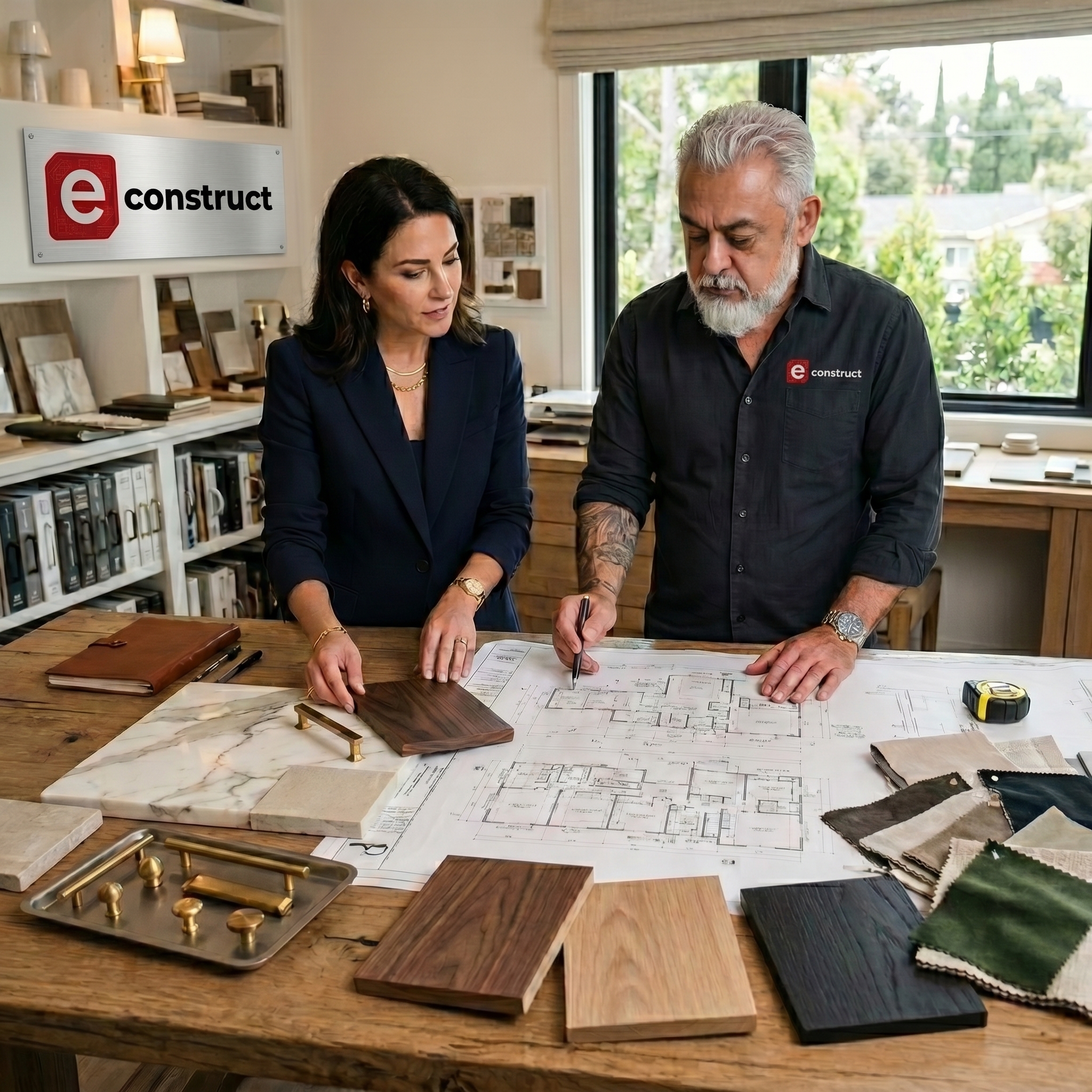
A real owner-decision calendar lists when appliances must be selected, when lighting must be locked, when stone must be templated, when hardware must be approved, and when automation assumptions need to be frozen. If those decisions slide, procurement slides, and so does the job.
The 12-Month Timeline
A Brentwood modernization can land around twelve months in the right circumstances, but only when preconstruction has done the heavy lifting first. If permitting, design scope, or procurement are unresolved, the construction schedule becomes fiction quickly.
Twelve months usually means the house was ready to start
When owners hear “twelve months,” they should assume that plans were coordinated, decisions were largely made, and the team had already aligned budget with scope. If demolition begins before that work is complete, the project often spends the first months discovering what should have been decided earlier.
Fast is not the same as clean
A rushed premium renovation can produce sloppy interfaces, change-order fatigue, and material mismatches that are expensive to fix later. The stronger objective is controlled velocity: a project that moves quickly because decisions were structured well, not because trades were forced to improvise.
A $1M Brentwood modernization can deliver a house that feels materially different - more useful, more elegant, and more current - when the scope is intentional. If you want help pressure-testing your modernization budget before design enthusiasm outruns construction logic, contact econstruct. We can help you define what the money should do before it starts disappearing.