




On a hillside property, the santa monica hillside construction conversation should begin with geotechnical engineering, not with finishes or room count. The soils report is the document that tells the architect, engineer, and builder what the ground is actually willing to do. If you start anywhere else, you are designing a house before you know the site.
That is not a theory. It is the difference between a project that feels controlled and one that keeps discovering problems after the drawings are already emotional. Our custom home construction team and luxury home builder workflows both treat soils and grading as the first real decision, because everything after that depends on it.
Why Geotech Comes First
Geotechnical engineering is the translation layer between the hillside and the house. It tells the project team where the ground is stable, where it needs help, and what kind of foundation system makes sense.
The site sets the rules
On a slope, the lot can determine whether the project needs a deeper foundation, stepped footings, grade beams, caissons, retaining walls, or drainage corrections. A beautiful concept can still be buildable, but only if it responds to the site instead of pretending the site does not exist.
The report protects the budget
The soils report usually prevents the worst kind of cost growth: late surprises. If the project team knows early that the lot needs more engineering, they can price it, sequence it, and design around it before the owner is locked into a layout that is expensive to support.
A hillside project is not just a house on a hill. It is a structure negotiated with gravity, water, and soil.
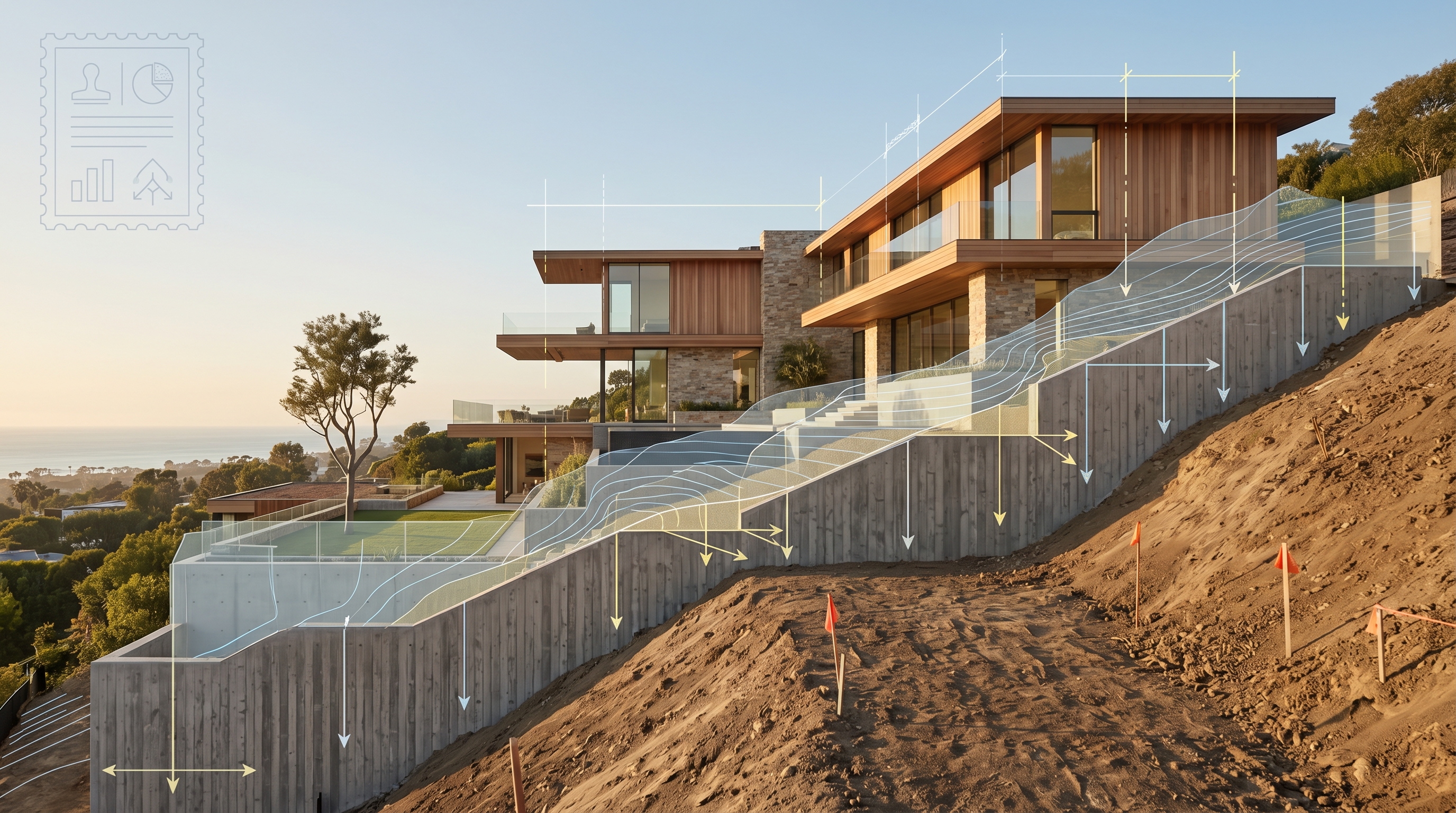
Reading the Soils Report
The soils report does not exist to confuse owners. It exists to reduce risk. Once the design team understands it, the rest of the project gets clearer.
What the engineer is looking for
Geotechnical engineers are checking soil composition, slope stability, drainage behavior, potential movement, and the conditions that will affect foundation and retaining decisions. On a hillside, those findings usually drive what can be built and how.
How the report affects design
If the report calls for deeper foundations or more structural support, the architecture may need to change. That is not a failure. It is the site telling the truth early enough for the team to respond intelligently.
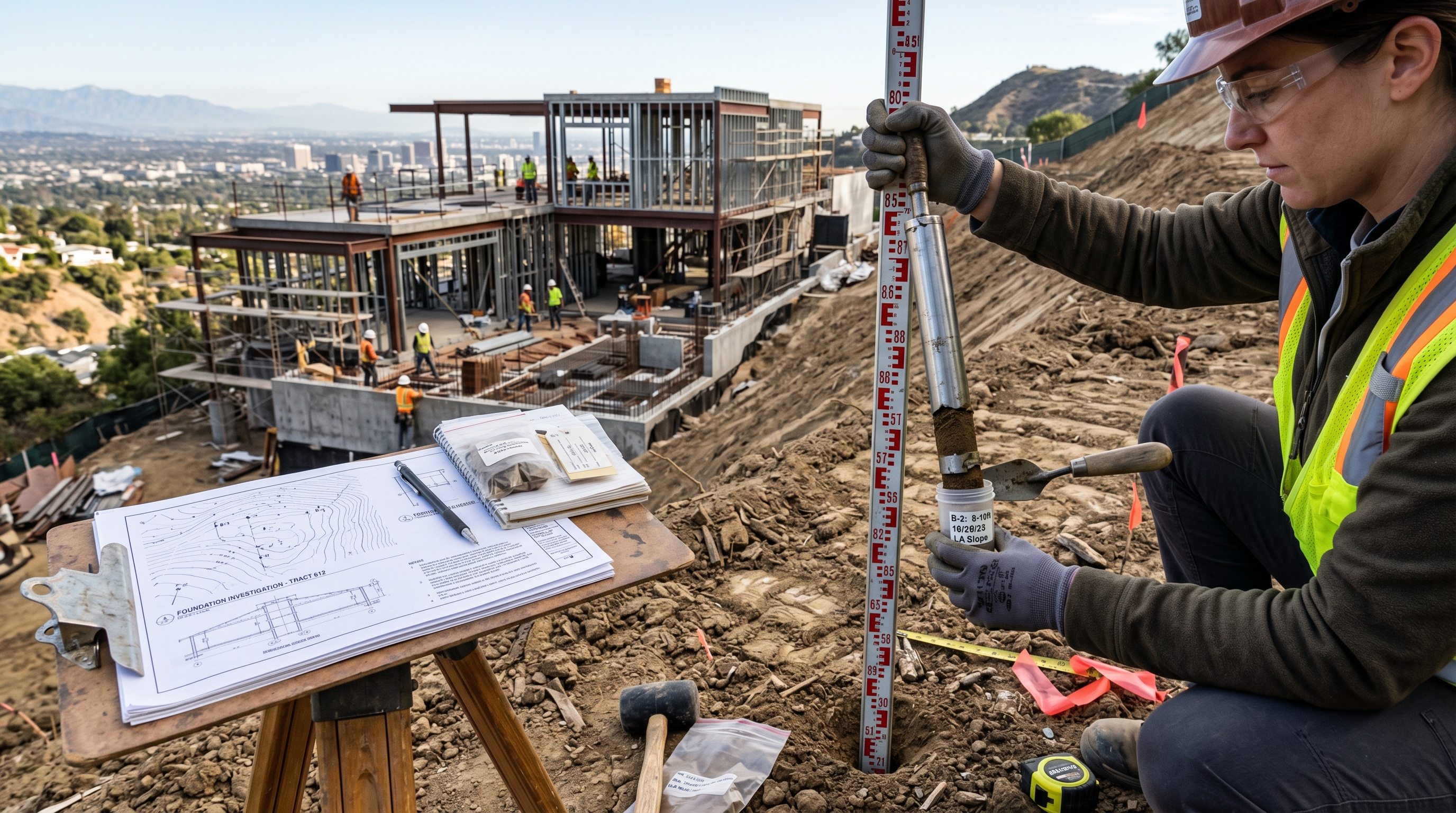
Foundation Options for Steep Lots
Not every hillside lot needs the same foundation strategy. The right answer depends on the soils, the slope, the span, and the building mass.
Common hillside approaches
Some homes can use stepped foundations and retaining strategies. Others need deeper structural support or more aggressive excavation planning. The geotechnical report helps the engineer decide which path makes sense before the builder prices the job.
Drainage is part of the foundation system
Water is often a bigger problem than people expect. On a slope, drainage is not a side issue. It is part of the foundation strategy because water movement can undermine the very conditions the structure is relying on.
Budgeting for Hillside Logistics
Hillside construction usually costs more because access, staging, excavation, retaining, and engineering all add complexity. A good budget does not hide that. It anticipates it.
The hidden cost is rework
If a project starts with design enthusiasm and only later discovers slope and soils constraints, the owner pays twice: once in redesign, and again in schedule loss. Early geotechnical work is usually cheaper than fixing a false assumption.
Coordination matters as much as the analysis
The best hillside projects are coordinated between architect, geotechnical engineer, structural engineer, and builder from day one. That is how you preserve the design intent without pretending the lot is flat.
Santa Monica hillside construction works best when the ground gets the first word. If you want help translating a soils report into a real build strategy, contact econstruct. We can help you turn the site into a plan before the plan turns into a budget problem.