
Pacific Palisades owners rebuilding after wildfire loss are asking one blunt question first: what is the real pacific palisades fire rebuild cost in 2026? The short answer is that the number on the first insurance worksheet is rarely the number that gets the project home. In the Palisades, owners are paying for current code, current labor, current permit friction, and current expectations on fit and finish. That is why the rebuild budget conversation has to start with field reality, not nostalgia for a pre-fire cost basis.
If you are rebuilding a primary residence, a second home, or an inherited lot, the project will move faster when you align your architect, builder, and insurance strategy early. Our fire rebuild team and luxury home building team both see the same pattern: owners lose months when they treat permit, insurance, and WUI compliance as separate tracks instead of one coordinated project.
The Real Cost of Rebuilding in 2026
The most useful way to discuss cost is by separating the house from the process wrapped around the house. Direct construction pricing may begin in a familiar range, but the total rebuild number rises once architecture, engineering, soils review, permit responses, utility coordination, temporary protection, and finish-level expectations are included.
Base construction is only one layer
For many Pacific Palisades projects, a credible 2026 working range starts around $450 to $800 per square foot. Lower-complexity lots with disciplined scope may sit near the bottom of that range. Architecturally ambitious homes, steep access, premium glazing packages, custom metalwork, or complex site retaining push well beyond it.
A sentence owners should remember is this: your rebuild cost is determined less by the house you lost than by the code-compliant house you are allowed and choose to build in 2026. That distinction matters because the new house must perform under today's approvals, not yesterday's assumptions.
Soft costs change decision-making early
Owners often focus on framing, roofing, drywall, and finish allowances, but the budget can move meaningfully before the slab is poured. Architectural redesign, structural coordination, civil review, soils input, title questions, survey updates, and permit responses all cost money and time. If the lot sits in a sensitive condition, site engineering and retaining work can change the budget before interior selections are even discussed.
In Pacific Palisades, ordinance-driven compliance and site logistics often create the biggest budget delta, not the cosmetic finish package.
Premium owners still need disciplined scope
Luxury clients sometimes assume the safest move is to “just make it better.” Sometimes that is correct. Sometimes it is an expensive way to mix emotional recovery with undefined scope. A rebuild works best when the owner identifies three tiers of decision making: restore, harden, and upgrade. That framework keeps insurance recovery aligned with what is necessary while letting strategic improvements happen in a controlled way.
The 18-24 Month Timeline Reality
The public conversation around wildfire recovery often compresses time into one simple idea: get permit, start build, move back in. The reality in Pacific Palisades is that every phase contains multiple dependencies. The Los Angeles permitting path, consultant coordination, utility reconnect strategy, procurement decisions, and neighborhood-scale volume all affect schedule.
Preconstruction takes longer than most owners expect
The first months after a loss are rarely linear. Owners are managing claim documentation, temporary housing, debris questions, lender notifications, and design priorities while still dealing with the emotional impact of displacement. That means the earliest decision window is also the most fragile one. A team that can establish budget logic, consultant sequencing, and permit direction early usually saves the owner months later.
Construction time is only part of the schedule
A well-run custom residence can still take twelve months or more in active construction once work begins. Add design development, permit review, revisions, mobilization, utility work, and final closeout, and a realistic full-project duration commonly lands between 18 and 24 months. The timeline may be shorter on a simpler rebuild, but planning for the compressed best case is how owners get disappointed.
Where schedules get lost
Rebuild schedules often slip for four reasons: unclear insurance scope, delayed owner decisions, incomplete permit drawings, and procurement surprises. Imported windows, specialty doors, switchgear, and custom finish elements can quietly become schedule drivers. If you are planning a more ambitious home than the one that burned, those lead-time decisions must happen early and be tied to a real procurement calendar.
Chapter 7A WUI Code Requirements
One of the most important facts in this guide is simple: Chapter 7A compliance is a project-defining cost and design input, not a line item you can defer until plan check comments arrive. California wildfire hardening guidance and related local review expectations affect the envelope from the roof down to the vents and exterior openings.
The roof, vents, and envelope all matter together
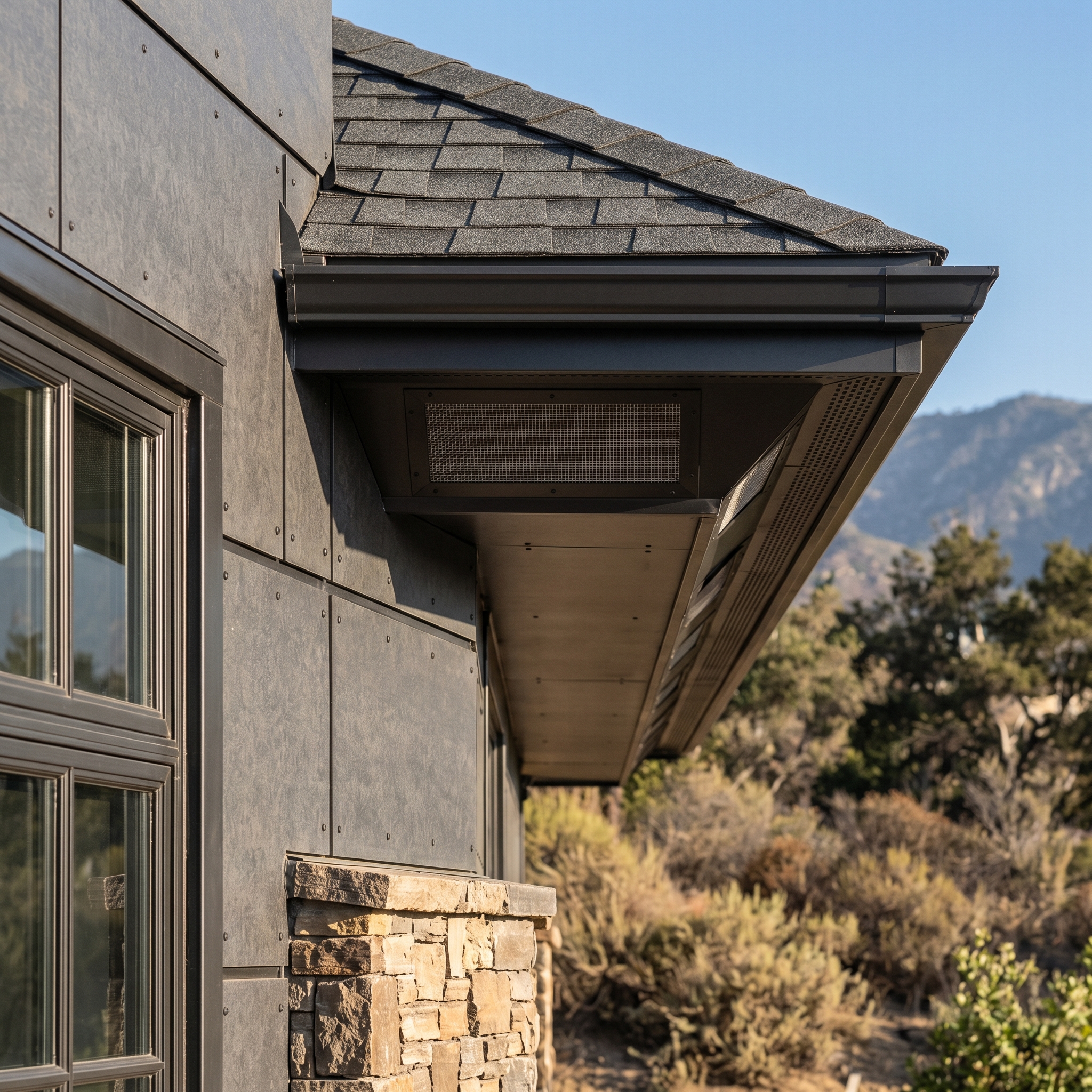
A Class A roof assembly is only one part of a defensible envelope. Ember-resistant vents, enclosed eaves, ignition-resistant exterior materials, and better detailing around openings all work together. CAL FIRE's Ready for Wildfire guidance is useful because it reinforces that home hardening is system-based, not product-based.
Design has to support compliance
Architectural intent and WUI detailing can coexist, but only if the design team accounts for them early. Deep overhangs, exposed rafter tails, specialty cladding transitions, and large glazing conditions all need to be evaluated against the compliance pathway. When those details are coordinated late, owners pay twice: once in redesign and again in schedule loss.
Why this matters for premium rebuilds
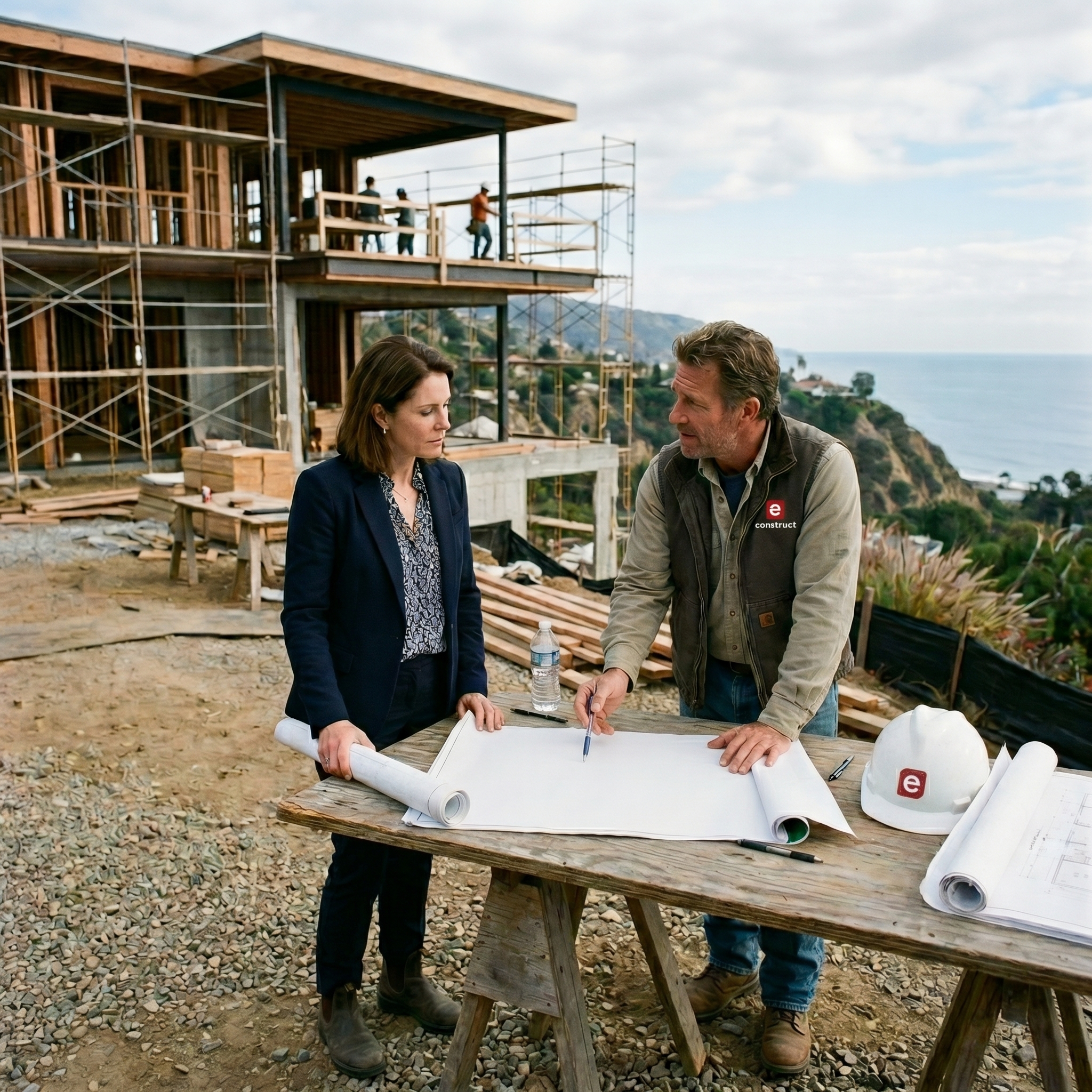
Many Palisades owners want a house that feels materially upgraded from what they lost. That is reasonable. The key is to integrate resilience without making the house feel institutional. This is where an experienced custom home construction team adds value: not by repeating code language, but by detailing a home that meets it cleanly.
Ordinance & Law Coverage Gaps
The most misunderstood budget problem in post-fire work is not the structure allowance. It is the gap between a carrier's replacement framework and the actual cost of code-required rebuilding in a changed market. FEMA's discussion of increased compliance costs is a reminder that code-triggered expense is real and often underappreciated.
Why policy language matters
Some homeowners discover late that ordinance and law coverage is capped far below the cost of envelope hardening, energy upgrades, electrical revisions, and permit-driven redesign. Even when the carrier agrees those upgrades are required, the policy limit may not match the real market cost to install them.
Documentation wins claims
Owners who organize consultant input, permit comments, scope narratives, and pricing logic early are in a better negotiating position. This is one reason we often tell homeowners to treat their builder's estimate as a project-control document, not just a contract number. It helps clarify what is code, what is owner upgrade, and what is missing from the insurance assumption set.
Choosing the Right Contractor
The right contractor for a Palisades rebuild is not simply a company that can build a nice house. You need a team that can sequence consultants, communicate around insurance pressure, and keep premium expectations intact while the job is being rebuilt under post-fire constraints.
Look for rebuild fluency, not just luxury fluency
A beautiful portfolio does not automatically translate into wildfire rebuild competence. Ask whether the builder has managed WUI-driven detailing, ordinance-gap conversations, phased procurement, and permit-response coordination on similar homes.
Ask for planning logic before construction promises
If a contractor promises a fast schedule before understanding the lot, design scope, and permit path, that is not confidence. It is theater. The better sign is a team that can explain what happens in the first ninety days, what decisions the owner must make, and where the budget can move before construction starts.
A Pacific Palisades rebuild succeeds when scope, code, and cash flow are aligned early. If you want a practical second opinion on your site, your claim, or your preconstruction budget, contact econstruct. We can help you build a rebuild plan that matches 2026 reality instead of wishful arithmetic.