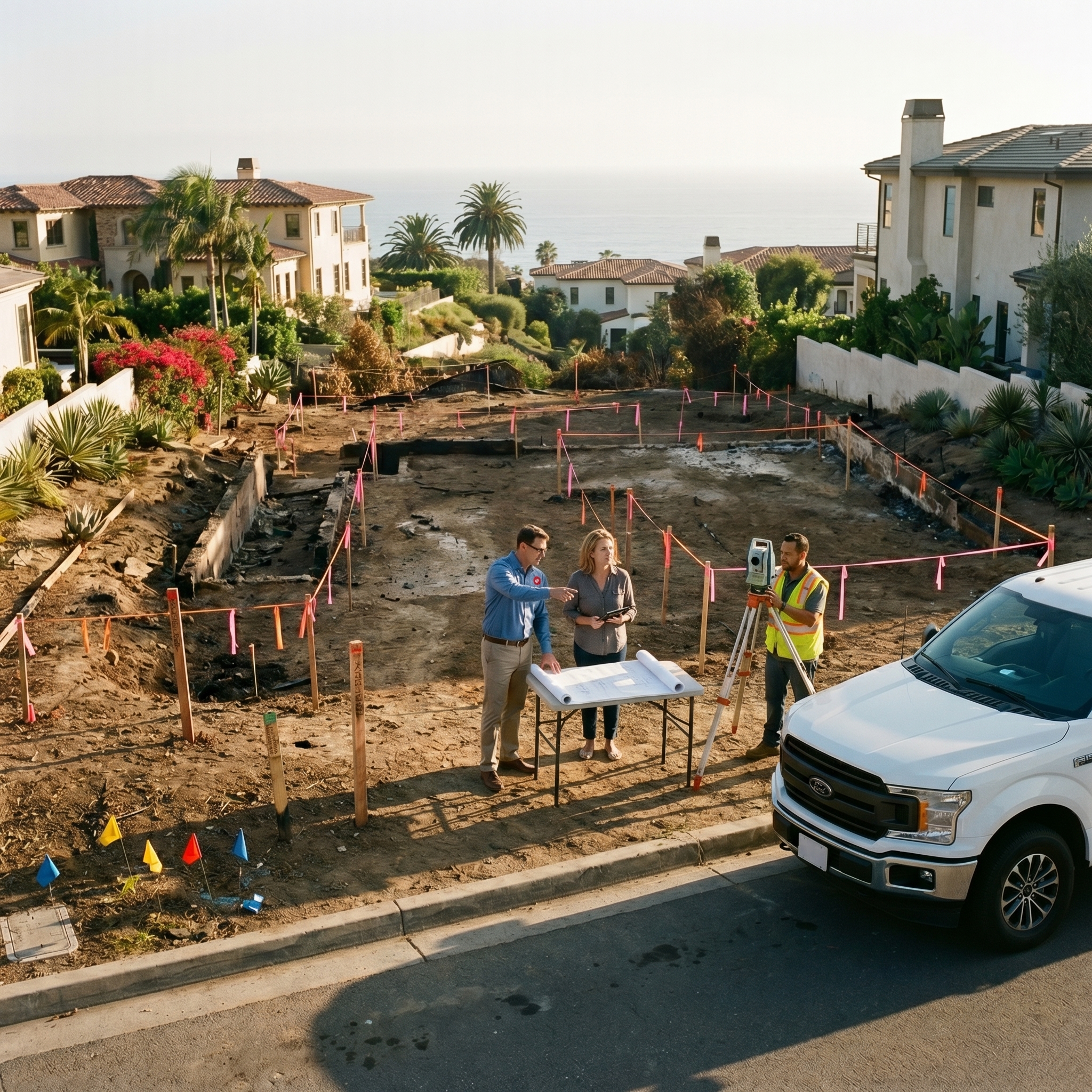

Homeowners hear the phrase chapter 7a wui compliance constantly after a wildfire, but many still are not told what the code means in practical terms. The simplest explanation is that Chapter 7A changes how the outside of the house has to perform in wildfire conditions. It is meant to reduce ignition risk from embers, flame contact, and vulnerable detailing around openings and transitions.
That matters because owners often begin by discussing finishes, room counts, or layout improvements while the real project-defining decisions are still outside. If the exterior strategy is not aligned early, design time gets wasted and permit review gets slower. Our fire rebuild team and custom home construction team both treat wildfire compliance as a schematic design issue, not a late-stage product shopping issue.
What Chapter 7A Actually Is
Chapter 7A is best understood as an exterior-envelope resilience standard. It is trying to reduce the ways a house catches from embers and heat before a major flame front ever reaches the structure.
The code is about assemblies, not isolated products
Owners often ask which vent, siding board, or roof tile is “Chapter 7A approved.” That question is understandable, but incomplete. The code logic works at the assembly level. A roof system, vent condition, wall assembly, eave treatment, or opening detail must perform as a whole. One compliant part inside a vulnerable detail does not solve the larger problem.
Approval depends on design translation
The same material can perform differently depending on how it is installed. This is one reason homeowners should be skeptical when someone says compliance is simple. It can be clear, but it is rarely simplistic. The detail matters.
The 5 Required Assemblies
Homeowners do not need to memorize the code book, but they should understand the five exterior conditions that most often drive planning and cost.
Roofing
Roofing is where most people start, and for good reason. The assembly needs to meet the appropriate fire-resistance standard and be installed as part of a complete system. Valleys, penetrations, edge conditions, and debris-collecting transitions all matter.
Exterior walls
Wall assemblies, cladding choice, and detailing around transitions affect ignition risk and overall approval strategy. This is where material taste and code logic need to cooperate rather than fight.
Vents and openings
Ember intrusion through vents remains one of the clearest homeowner talking points because it is easy to visualize. CAL FIRE's hardening guidance reinforces that vulnerable openings are one of the first places a resilient envelope needs discipline.
Eaves and soffits
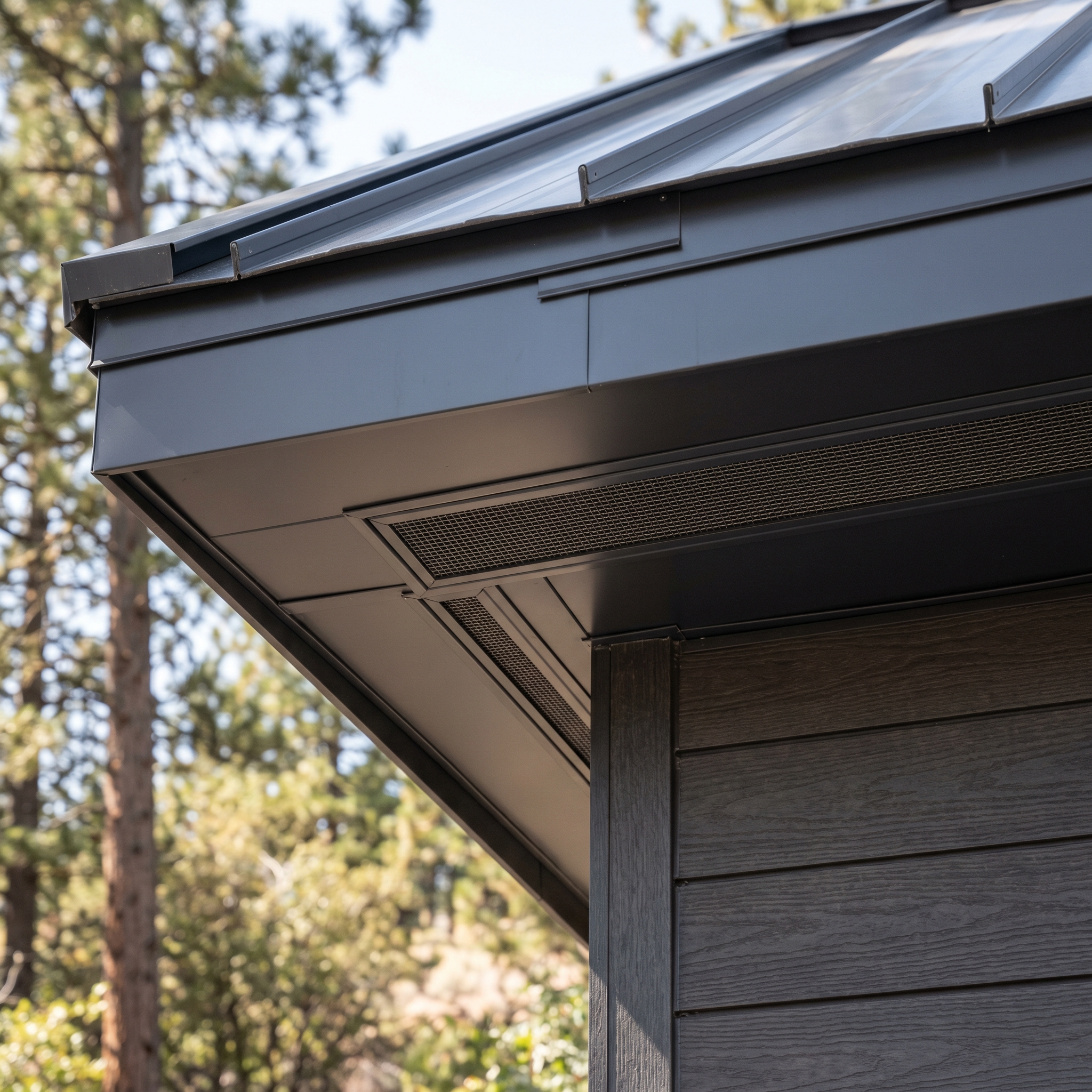
Exposed undersides, vents, returns, and combustible detailing at the roof edge are common trouble spots. Attractive architecture is still possible, but it has to be detailed intentionally.
Windows and doors
Exterior openings are not only about glass selection. The surrounding conditions, trim details, and exposure context all influence performance.
The homeowner question should not be “What product do I buy?” It should be “What exterior system am I actually building?”
Class A Roofing Explained
Class A roofing is often treated like the entire answer to wildfire hardening. It is not. It is a critical foundation, but it is only one piece of a larger compliance strategy.
Why Class A matters
A compliant roof assembly is one of the most important baseline protections because the roof is so exposed to ember attack. Good roofing also protects everything downstream: sheathing, attic conditions, vents, and adjacent transitions.
Why Class A is not enough on its own
A house with a compliant roof but vulnerable vents, exposed eaves, combustible interface details, or weak wall transitions is not finished from a wildfire-hardening standpoint. Owners should think of the roof as the first big box to check, not the last.
Ember-Resistant Vents & Eaves
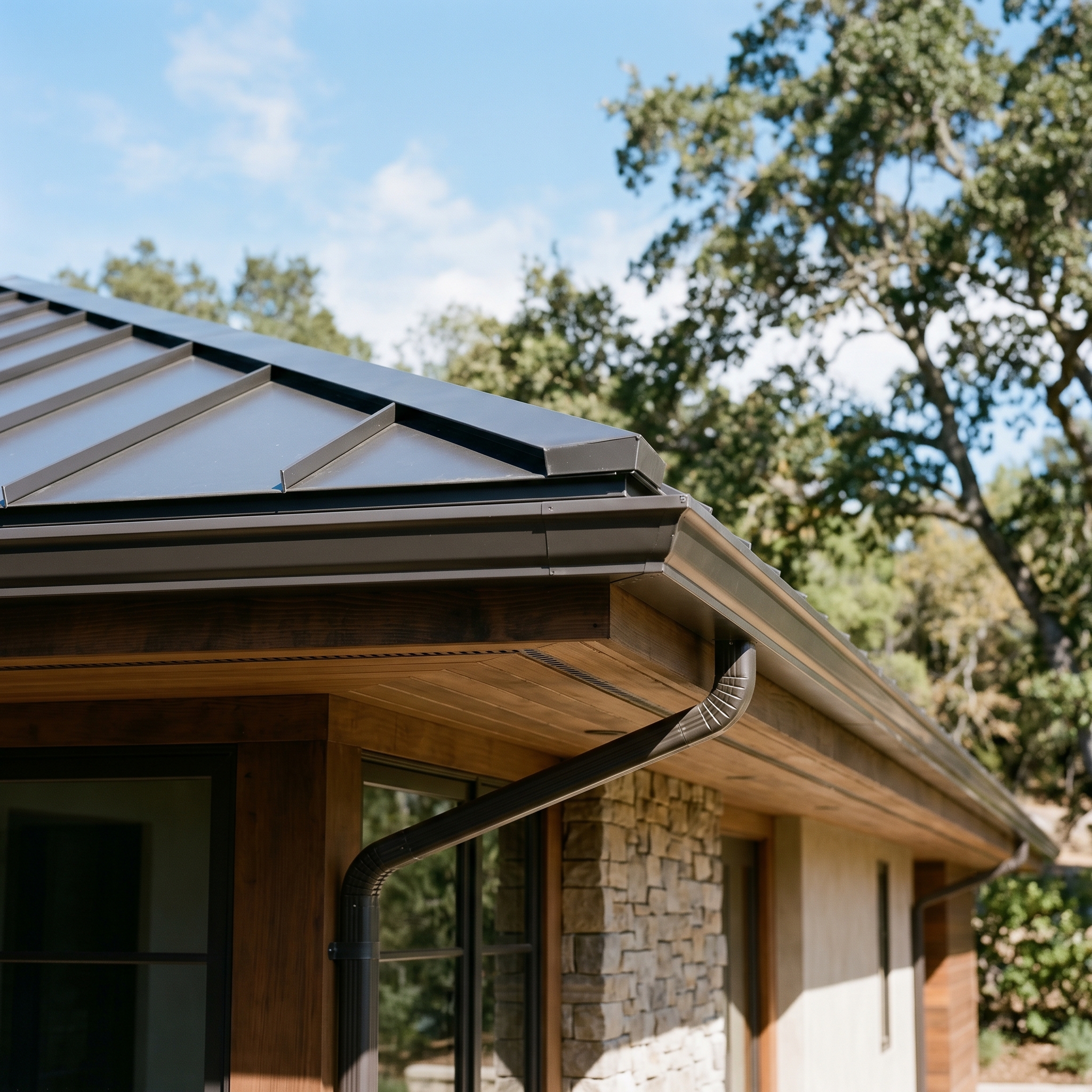
In practical homeowner terms, vents and eaves are where resilience becomes visible. They are also where designers and builders can either solve the problem cleanly or create lingering approval friction.
Ember-resistant vents protect the hidden parts of the house
Vents exist because the house needs air movement. The problem is that wildfire conditions exploit those same openings. Ember-resistant vent strategy is about keeping that opening functional while reducing the chance that a small airborne ignition source becomes a catastrophic attic or crawlspace event.
Eaves need deliberate detailing
Deep eaves can be beautiful and useful, especially in Southern California light. But if their underside treatment and transitions are not handled carefully, they become a vulnerability. This is where experienced detailing matters more than generic reassurance.
How Compliance Affects Your Budget
The biggest homeowner mistake is assuming code is a separate bucket that gets priced after design. In reality, compliance changes design direction, procurement, consultant coordination, and installation sequencing from the beginning.
Late discovery costs more than the materials themselves
If an owner waits until plan review comments to ask what has to change, the project may lose time in redesign, product substitution, and consultant coordination. Those delays are often more expensive than the compliant materials.
Good planning keeps the house premium
n Wildfire-hardening details do not have to make a house feel downgraded. The right luxury home builder will integrate resilience into a premium design language instead of treating it as an ugly afterthought.
Budget the envelope honestly
A homeowner should assume that wildfire compliance will influence roofing, cladding, vents, soffits, openings, and detailing around exterior transitions. That does not mean every project becomes unmanageable. It means the exterior envelope needs a real budget strategy from day one.
The plain-English version is simple: Chapter 7A is the framework that turns wildfire resilience into actual building decisions. If you need help translating that framework into a real design and permit strategy for your site, contact econstruct. We can help you define the code path before the code path defines your schedule for you.